
Share Richard Glen Stoker's obituary with others.
Invite friends and family to read the obituary and add memories.
Stay updated
We'll notify you when service details or new memories are added.
You're now following this obituary
We'll email you when there are updates.
Select your format and elements to print

IN LOVING MEMORY OF Richard Glen Stoker
Richard Glen
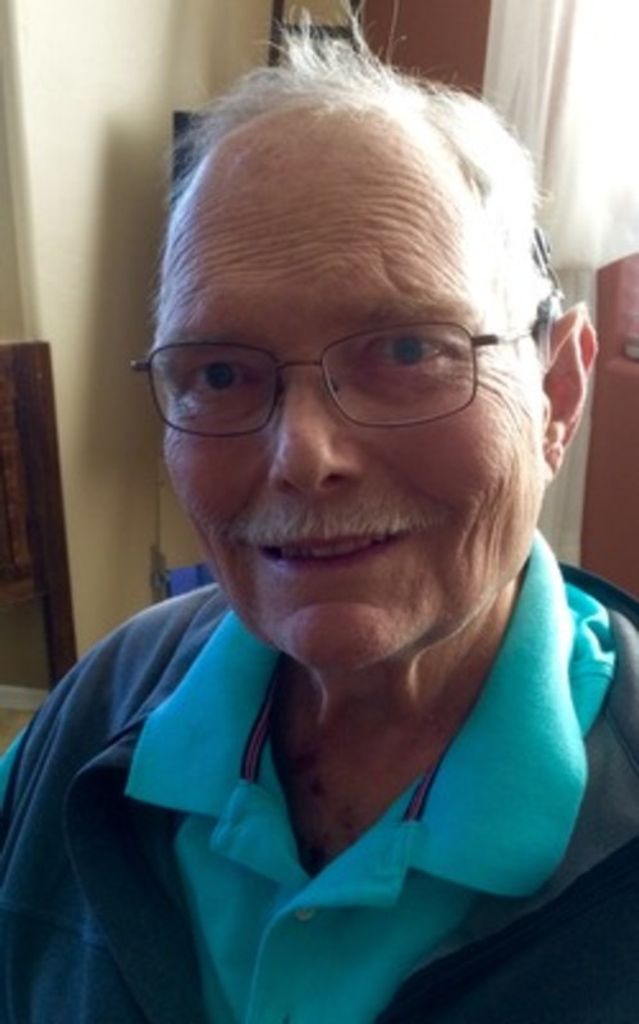
Stoker
Aug 31, 1947 — Nov 3, 2016
Richard Glen Stoker's Obituary
Richard Glen Stoker, 69 died peacefully on Thursday November 3, 2016 at home in Green Valley, Arizona. His wife, Marilyn was at his side together with his brothers, Bill (Jenny), Steve (Janice) and Roger and their families.
Richard was born in Ogden, UT, To Glen and Melba Stoker. He was the oldest of four boys. His profound deafness did not stop him from getting involved in science and sports. He was an avid chemistry enthusiast using his chemistry set to build rockets and cannons. He loved football and greco-roman wrestling achieving All-State at Weber High School. It is during these formative years that Richard's life time motto first showed itself " If anything is worth doing its worth doing to excess" (Edwin Land).
He served a mission for the Church of Jesus Christ of Latter Day Saints in Brazil. It was at this time that he realized that despite his profound hearing loss, he had an aptitude for languages and cooking. He went on to be able to speak Portuguese like a native and cook the national dishes as well or better than the locals!
His professional career started off in chemistry but he soon tired of quality controlling Pillsbury pancakes and returned to the University of Utah where he graduated with his Master's degree in Education of the Deaf. Richard's insatiable scientific mind, passion for teaching deaf children to talk and quest for excellence led him to a variety of academic institutions around the world including the University of Alabama, University of Salford (UK) and McGill University (Montreal, Canada) where he received his PhD in Communication Disorders. On graduating, he took a Faculty position at Pennsylvania State University (PSU) Speech and Hearing Sciences Department. During his tenure at PSU he mentored several PhD and MS students that went on to very successful careers in Audiology and Education of the Hearing Impaired. More importantly yet, he inspired countless parents of deaf children through his active involvement and leadership with the Alexander Graham Bell Association for the Deaf. His career went on to include a Professorship at McGill University (Montreal, Canada) and Director of the Central Institute for the Deaf (St. Louis, MO). Throughout this period he refused to accept that deaf children should be defined by dysfunctional cells in their inner ears. To him, each child should be provided the maximum opportunity to learn language so that they could become independent learners through reading books and engaging experts in their chosen endeavors.
In the mid 1990's Richard's career took a significant turn when he became a Senior Scientist at Bell Northern Research in Ottawa, Canada. He became a respected member of a think tank group developing early concepts for telemedicine, and consumer products that we know today as "smart house" tools.
In the late 1990's Richard had his first major health problem resulting in by-pass surgery. Time on the heart lung machine during surgery resulted in permanent brain damage that interfered with his ability to manage complex sequencing. For many people this would have been the end, but not for Richard. He retired from his professional career and harnessed his creative energy towards becoming a farmer/artisan. Together with his wife Marilyn he bought and restored an old sugar maple "bush", running lines between trees, inventing contraptions to keep the sap flowing and creating the best maple syrup in the neighborhood. Each harvest culminated in a "sugaring-off" party where friends and neighbors would meet to enjoy each others company, eat too much maple syrup and welcome the beginnings of the Canadian spring. At this time, he and Marilyn started their art glass studio and thrilled in working together to create art glass works that responded to and kindled clients' passions for beauty.
For the last three years Richard and Marilyn enjoyed the beautiful weather and "other world" environment of the desert southwest. Here they reveled in designing and making unique Mission inspired furniture for their new home.
Richard was never happier than when he was grappling with a problem that couldn't be done. Again Edwin Land captured Richard's motivation: " Don't undertake a project unless it is manifestly important and nearly impossible ".
Richard was born in Ogden, UT, To Glen and Melba Stoker. He was the oldest of four boys. His profound deafness did not stop him from getting involved in science and sports. He was an avid chemistry enthusiast using his chemistry set to build rockets and cannons. He loved football and greco-roman wrestling achieving All-State at Weber High School. It is during these formative years that Richard's life time motto first showed itself " If anything is worth doing its worth doing to excess" (Edwin Land).
He served a mission for the Church of Jesus Christ of Latter Day Saints in Brazil. It was at this time that he realized that despite his profound hearing loss, he had an aptitude for languages and cooking. He went on to be able to speak Portuguese like a native and cook the national dishes as well or better than the locals!
His professional career started off in chemistry but he soon tired of quality controlling Pillsbury pancakes and returned to the University of Utah where he graduated with his Master's degree in Education of the Deaf. Richard's insatiable scientific mind, passion for teaching deaf children to talk and quest for excellence led him to a variety of academic institutions around the world including the University of Alabama, University of Salford (UK) and McGill University (Montreal, Canada) where he received his PhD in Communication Disorders. On graduating, he took a Faculty position at Pennsylvania State University (PSU) Speech and Hearing Sciences Department. During his tenure at PSU he mentored several PhD and MS students that went on to very successful careers in Audiology and Education of the Hearing Impaired. More importantly yet, he inspired countless parents of deaf children through his active involvement and leadership with the Alexander Graham Bell Association for the Deaf. His career went on to include a Professorship at McGill University (Montreal, Canada) and Director of the Central Institute for the Deaf (St. Louis, MO). Throughout this period he refused to accept that deaf children should be defined by dysfunctional cells in their inner ears. To him, each child should be provided the maximum opportunity to learn language so that they could become independent learners through reading books and engaging experts in their chosen endeavors.
In the mid 1990's Richard's career took a significant turn when he became a Senior Scientist at Bell Northern Research in Ottawa, Canada. He became a respected member of a think tank group developing early concepts for telemedicine, and consumer products that we know today as "smart house" tools.
In the late 1990's Richard had his first major health problem resulting in by-pass surgery. Time on the heart lung machine during surgery resulted in permanent brain damage that interfered with his ability to manage complex sequencing. For many people this would have been the end, but not for Richard. He retired from his professional career and harnessed his creative energy towards becoming a farmer/artisan. Together with his wife Marilyn he bought and restored an old sugar maple "bush", running lines between trees, inventing contraptions to keep the sap flowing and creating the best maple syrup in the neighborhood. Each harvest culminated in a "sugaring-off" party where friends and neighbors would meet to enjoy each others company, eat too much maple syrup and welcome the beginnings of the Canadian spring. At this time, he and Marilyn started their art glass studio and thrilled in working together to create art glass works that responded to and kindled clients' passions for beauty.
For the last three years Richard and Marilyn enjoyed the beautiful weather and "other world" environment of the desert southwest. Here they reveled in designing and making unique Mission inspired furniture for their new home.
Richard was never happier than when he was grappling with a problem that couldn't be done. Again Edwin Land captured Richard's motivation: " Don't undertake a project unless it is manifestly important and nearly impossible ".
To send flowers or plant a memorial tree in memory, please visit our flower store.
Funeral Services for Richard Glen Stoker
Celebration of Life

November
11
Friday
Church of Jesus Christ Latter Day Saints
10:30 am - 12:30 pm
Richard Glen Stoker's Guestbook
Visits: 4
This site is protected by reCAPTCHA and the
Google Privacy Policy and Terms of Service apply.
Service map data © OpenStreetMap contributors